Why Predictable Routines Create a Stronger Sense of Security for Children
Children rarely describe their needs in strategic terms. They do not ask for structure, consistency, or emotional stability. Yet these qualities often shape their daily experiences more than any single lesson, activity, or conversation.
A sense of safety is built gradually. It develops through repeated experiences that help children understand what to expect from the people and environments around them. While life inevitably includes surprises and challenges, predictable routines can provide an anchor that helps children navigate uncertainty with greater confidence.
For families, educators, and caregivers, this principle is often less about strict schedules and more about creating dependable patterns that foster trust and emotional security.
Stability Helps Children Understand Their World
Children are constantly learning how the world works. Every interaction contributes to their understanding of relationships, responsibility, and belonging. When routines are reasonably consistent, children gain valuable signals about what comes next and what is expected of them.
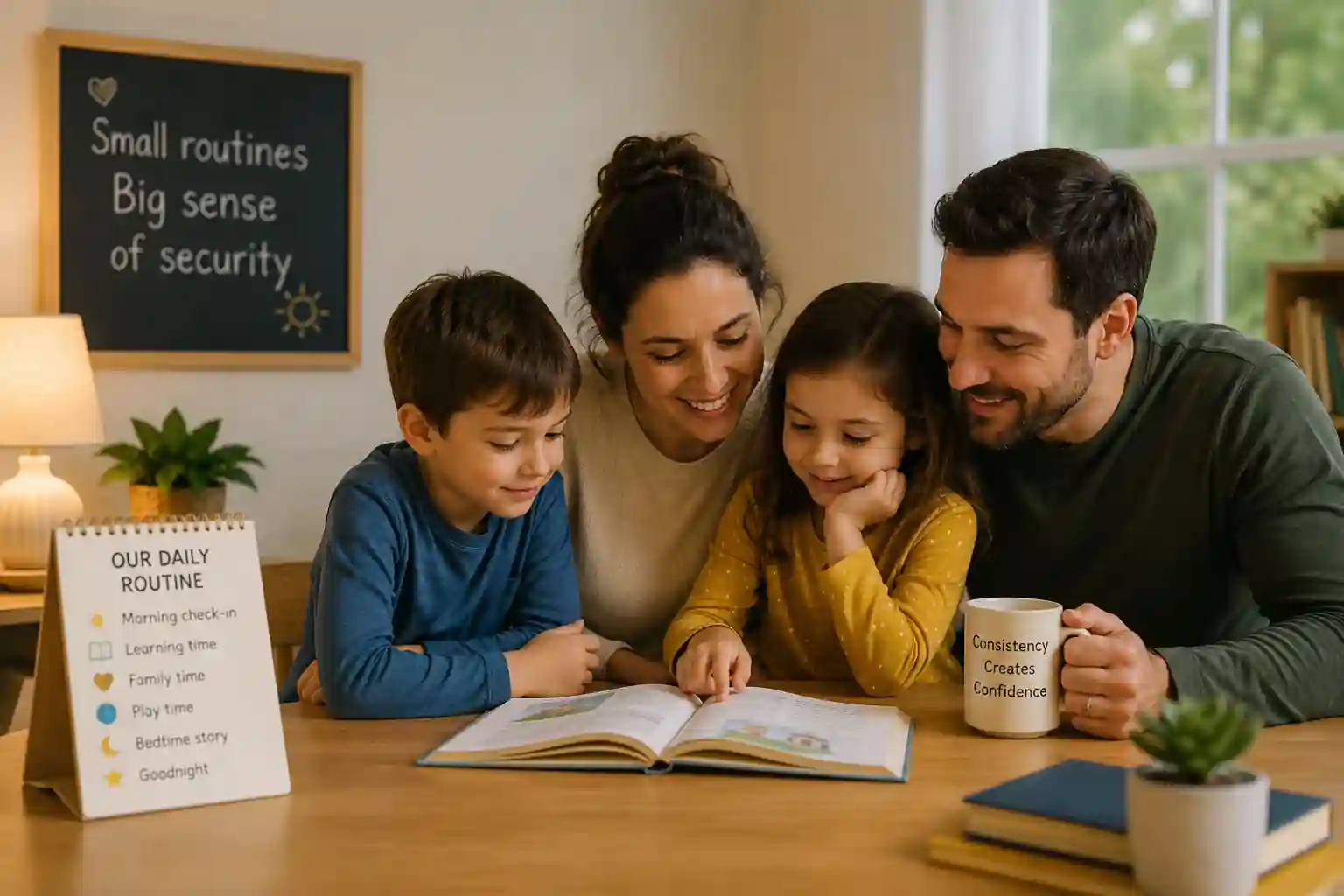
Morning rituals, shared meals, bedtime practices, and simple daily check-ins can become powerful sources of reassurance. These moments may appear ordinary, yet they help establish a rhythm that allows children to focus less on uncertainty and more on growth.
This is one reason many families are drawn to simple reflective practices such as those shared through The Bright Spot. Small, repeatable experiences often have a greater influence on a child's sense of security than occasional grand gestures.
Importantly, stability should not be confused with rigidity. Children benefit from flexibility and adaptation as well. The goal is not to eliminate change but to provide enough consistency that change feels manageable when it occurs.
The Value of Systems Beyond Childhood
The relationship between stability and wellbeing extends beyond family life. Across many areas of society, predictable systems help individuals navigate complexity with greater confidence.
Schools rely on routines. Community organisations depend on established processes. Workplaces often function best when expectations are clear and communication follows reliable patterns.
This broader principle appears in a wide range of settings. Discussions around marketing systems for small businesses, for example, reflect a similar interest in creating dependable frameworks that reduce uncertainty and support consistency over time. Although the context is entirely different, the underlying idea remains familiar: people tend to function more effectively when they can rely on stable structures rather than constant improvisation.
The lesson is not that systems remove challenges. Rather, they provide a foundation that allows individuals and groups to respond to challenges with greater clarity.
Security Is Built Through Small Repeated Actions
When people think about safety, they often focus on major decisions or significant events. Yet much of what creates a lasting sense of security emerges from ordinary experiences repeated over time.
A child who knows that a trusted adult will listen. A family that shares a familiar evening routine. A classroom that begins each day with the same welcoming ritual. These practices may seem modest, but they contribute to an environment where children feel grounded and supported.
The cumulative effect can be profound. Consistent experiences help children develop trust in the people around them and confidence in their ability to navigate the world.
While every family and community will create its own rhythms, the principle remains remarkably consistent. Stability is rarely established through a single moment. More often, it grows quietly through small actions repeated day after day, creating a dependable foundation from which children can explore, learn, and thrive.