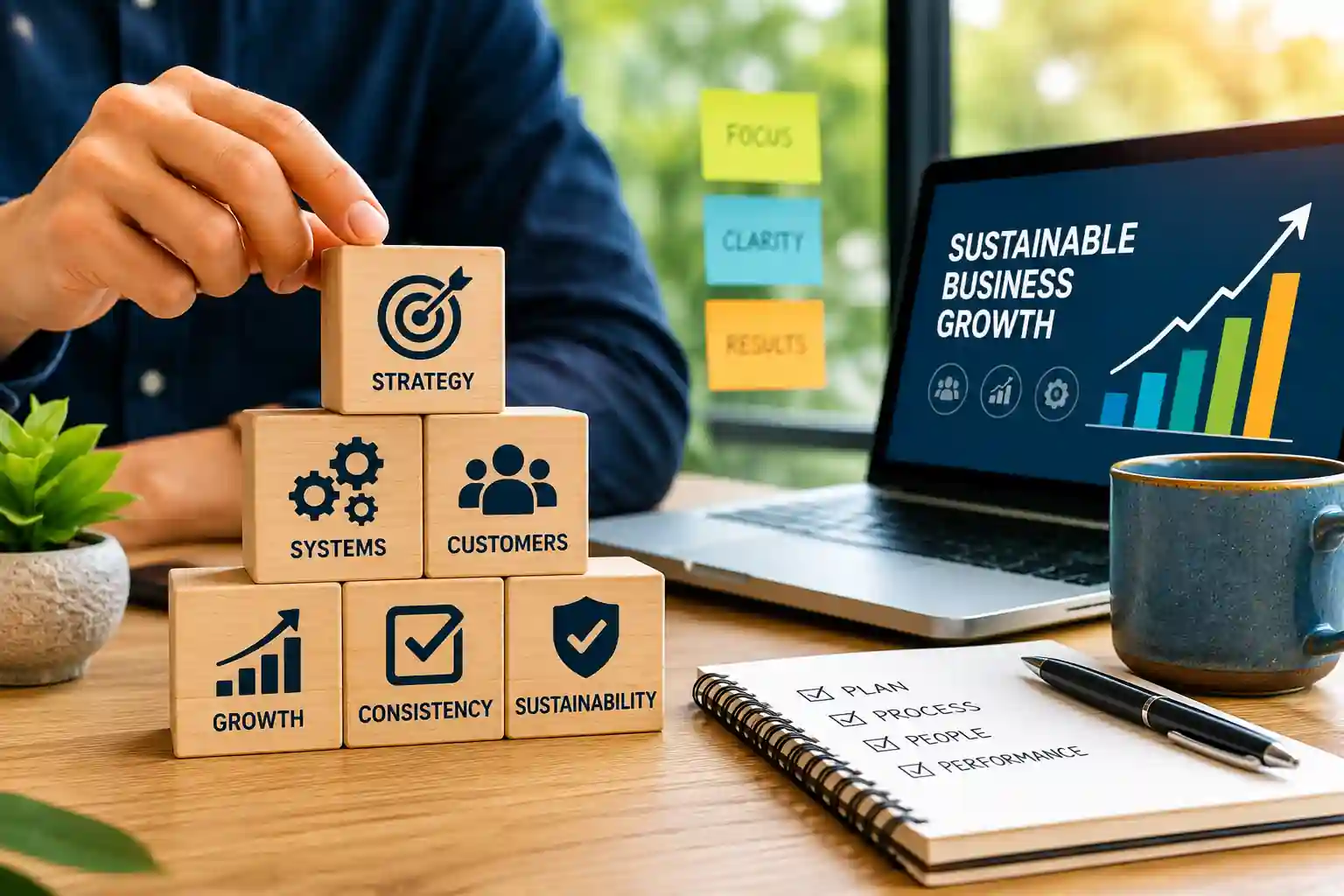
Why Sustainable Small Businesses Depend on Systems, Not Short-Term Wins
Small businesses often begin with a clear purpose. A founder sees a need, develops a service, and gradually builds relationships within a community. In the early stages, growth is frequently driven by personal effort, adaptability, and direct customer interaction. As operations expand, however, the factors that support long-term sustainability begin to change.
Many business owners discover that what helped them get started is not always enough to help them endure. Sustainable growth relies less on individual effort and more on the systems that support decision-making, customer relationships, and day-to-day operations.
For organisations focused on longevity, this shift deserves careful attention.
Building Stability Through Repeatable Processes
One of the most common challenges facing small businesses is inconsistency. Processes that exist only in the owner's head can work for a period of time, but they become increasingly difficult to manage as teams grow and responsibilities expand.
This is particularly evident in industries where compliance, documentation, and customer communication play an important role. The ability to maintain quality standards over time often depends on clear procedures rather than individual memory or informal practices.
At Navig8Biz, discussions around business development frequently emphasise the importance of structured systems and operational clarity. Resources available through the Navig8Biz website reflect a broader understanding that sustainable organisations require foundations capable of supporting growth without creating unnecessary complexity.
When processes are documented and responsibilities are clearly defined, businesses are often better positioned to adapt to market changes, staff transitions, and unexpected disruptions.
Sustainability Requires Visibility and Coordination
Long-term sustainability is not simply a financial concern. It also involves maintaining consistent communication, understanding customer needs, and ensuring that different areas of the business work together effectively.
Many organisations invest considerable effort in attracting new customers while giving less attention to how information moves throughout the business. Over time, fragmented systems can create inefficiencies that affect both customer experience and internal operations.
This has contributed to growing interest in integrated approaches that combine communication, planning, and visibility into a more cohesive framework. Within this broader conversation, platforms focused on marketing systems for small businesses have emerged as examples of how some organisations are attempting to reduce operational fragmentation while improving coordination across different functions.
The significance of such developments extends beyond marketing itself. They reflect a wider recognition that sustainability often depends on having reliable systems that help businesses maintain consistency over many years rather than pursuing isolated short-term initiatives.
Looking Beyond Immediate Growth
Economic conditions, customer expectations, and technology continue to evolve. While these changes can create opportunities, they also introduce uncertainty. Businesses that endure tend to share a common characteristic: they prepare for long-term resilience rather than focusing exclusively on immediate growth.
This preparation may involve improving operational processes, strengthening internal communication, investing in staff capability, or developing clearer methods for managing information. None of these efforts guarantee success. However, they can contribute to greater stability when circumstances change.
For small businesses, sustainability is rarely the result of a single decision. It emerges through a series of practical choices that improve consistency over time. The organisations most likely to remain effective in the future are often those that recognise the value of strong systems today and continue refining them as their needs evolve.